Leave room for different needs
A festival is a temporary town built on grass, dust or asphalt, and it isn't always designed with every body in mind. Many events publish accessibility information and run dedicated services, but the details differ from site to site. Starting early gives you time to ask questions, arrange support and decide whether a particular setting will work for you.
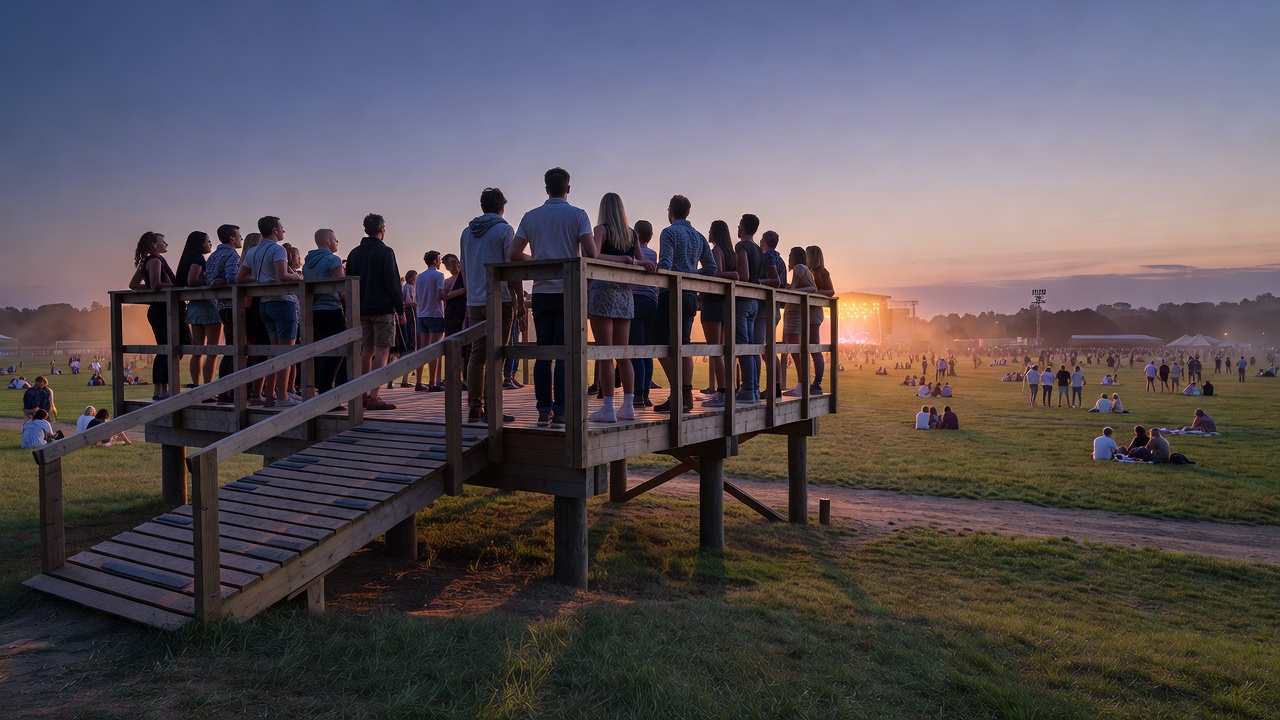
Start with the access information
Look for an accessibility or ADA section on the event's website and read it before you buy. It may describe accessible viewing areas, shuttle or cart services, accessible restrooms and camping, companion ticket arrangements and how to request accommodations. If information is missing or vague, contact the organizer in writing and keep the reply. In the United States, the Americans with Disabilities Act sets broad obligations for many public events, but how it applies to a specific situation is a legal question; a disability rights organization or a lawyer can advise if problems come up.
Mobility and terrain
Ground conditions change everything. Grass turns to mud after rain, desert sites bring soft sand and dust, and city sites can mix pavement with slopes and cable covers. Distances between parking, entrances, camping and stages can be large. Ask about accessible parking or drop-off points, the surface near viewing platforms and whether mobility devices can be charged on site. Pace matters too: plan seated breaks, and consider a city or small-scale event if long walks are a concern.
Hearing, vision and sensory needs
Main-stage volume is high, and hearing protection helps almost everyone. Some events provide sign language interpretation for selected sets, usually requested in advance. Strobes, haze and dense crowds can be hard for people with photosensitivity, autism or anxiety, so ask whether quiet or low-stimulation areas exist and note calmer times such as early afternoon. For low vision, ask about path lighting, accessible maps and whether a sighted guide can enter with you.
Medical needs and medication
Rules for bringing medication, syringes, inhalers, CPAP machines or refrigerated items vary, so check the event's policy and request any accommodation ahead of time. Keep prescriptions in their original packaging and carry a copy of the prescription details. Find the medical tent on the map when you arrive. If heat, crowds or long days could affect a health condition, talk the trip through with your doctor first; nothing here replaces personal medical advice.
Questions to send the organizer
- Where are the accessible entrances, viewing areas and restrooms?
- How do I request accommodations, and by when?
- Is there a companion ticket policy?
- Are there shuttles or assisted transport around the site?
- Can I bring and store medication or medical equipment?
- Are service animals welcome, and where can they rest?
- Is sign language interpretation offered, and for which sets?
- Are there quiet or low-sensory spaces?
Plan as a group
If you're traveling with friends, share the plan rather than carrying it alone. Agree on pace, meeting points and when to leave. A group that knows where the accessible viewing area is, who carries what and how to reach medical staff makes the whole weekend smoother for everyone in it.