A field guide for first-time festivalgoers
Find your rhythm in the US festival landscape
Type "top music festivals in the US" into a search bar and you'll get rankings, hype and a wall of logos. What a first-timer really needs is sharper: a way to tell which kind of festival suits your stamina, your budget, your travel plans and the music you came for.
This guide is for anyone heading to a first festival in the United States, whether that means one day in a city park or three nights in a tent on farmland. You'll compare settings, learn to read a lineup, plan the hours around the music and think through access needs before they turn into problems. Nothing gets ranked and no schedules are guessed at. Festival details shift from season to season, so the focus stays on what to check and why it matters.

Match the setting to your stamina
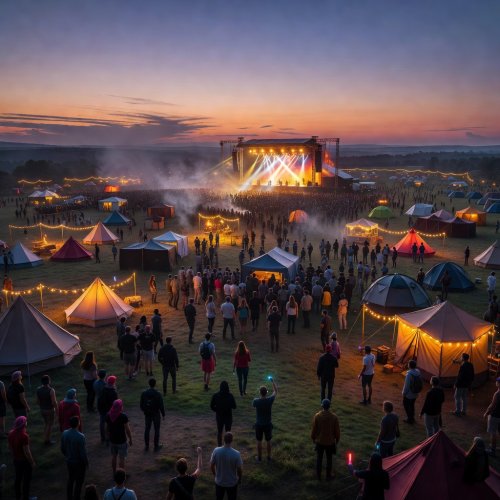
The biggest early choice isn't the lineup. It's the setting. Where you sleep, how far you walk and how long you stay on your feet shape every hour of the weekend. The same artist can feel electric in a city park when a shower waits across town, and draining at a remote site where the dust never settles. Run through this table as a stamina check before you fall for a poster.
| Setting | Where you sleep | Daily demands | Often suits | Watch for |
|---|---|---|---|---|
| City park or urban grounds | Hotel, short-term rental or your own home | Long days on foot, then transit or a ride home each night | First-timers, people who want a real bed, single-day visitors | Crowded exits, surge pricing on rides, high lodging costs nearby |
| Rural camping weekend | Tent, car or camper on or near the site | Little real downtime; heat, noise and lost sleep add up | Groups who want the full immersive weekend | Weather swings, limited showers, long walks from camp to stages |
| Remote or destination event | Camping, or lodging far from the gates | Long drive or flight plus shuttles; self-sufficiency matters | Experienced campers with flexible time off | Few nearby services, extreme temperatures, slow traffic in and out |
| Small or boutique gathering | On-site camping or nearby towns, depending on the event | Shorter walks, smaller crowds, fewer stages | People who want easy navigation and a calmer pace | Fewer big names, nearby lodging that fills quickly |
| Single-genre event | Varies with location | Depends on the site; often fewer stages | Fans who know exactly what they want to hear | Less variety if your group has mixed taste |
Five questions before you commit
- How many hours can you stand and walk comfortably, and how will you feel on day three?
- Do you need a private bathroom, a shower or a quiet room to sleep well?
- Can you get to the site and back without driving after a long night?
- Is the music you care about packed into one day or spread across the weekend?
- Does anyone in your group have needs that limit terrain, heat or noise?
If most of your answers lean toward comfort and predictability, start with a city setting or a single day. If your group is eager, flexible and handy with gear, a camping weekend may be exactly the memory you're after.
Follow four planning tracks
Each track takes one part of the decision and goes deeper. Work through them in order, or jump straight to the one that's nagging at you.
- Festival Formats
City weekends, camping marathons, remote destinations and small gatherings each ask something different of you. This track lays out the trade-offs and decodes the ticket terms you'll meet along the way.
- Lineup Reading
A festival poster is a layered map, not a ranking of talent. See how billing tiers, day splits, stage layouts and set-time clashes work, and how to build a schedule loose enough to survive change.
- Trip Logistics
Transport, lodging, bag rules, heat and the long walk out at midnight decide how good the music feels. Ordered travel steps and a packing checklist keep the practical side under control.
- Access Planning
Mobility, hearing, vision, sensory and medical needs are far easier to meet when you plan early. Find the questions worth sending an organizer and what to arrange before you buy.
Before the gates open
Is a camping festival too much for a first-timer?
Not necessarily, but it asks more. You trade a bed and a shower for full immersion, and tiredness builds over several days. If you've never camped, a city festival or a single-day pass is a gentler first step.
When do set times come out?
Many events publish them only shortly before the festival, sometimes just in an official app. Plan around the day split first and keep your schedule flexible until times are confirmed.
What does a festival trip actually cost?
The ticket is only one line. Add travel, lodging or camping gear, food and water, local transport and a buffer for surprises. Costs vary widely by event, city and timing, so build your budget piece by piece.
Do I really need to read the bag policy?
Yes. Many US festivals restrict bag size or type, and rules on chairs, chargers and refillable bottles differ. The event's own website is the only reliable source.